



Systems Analysis

Presentation
Our objective is to provide professional training directly related to the areas of analysis, organization, programming and control of information systems, to contribute to the economic, social and cultural development of the Department of Itapúa and the country.
Why choose UPMS?
UPMS responds to today's world and looks to the future, which is why we offer:

State-of-the-art infrastructure

Practical training and
intership

Modern laboratories

National and international agreements

Scientific and technological research

University extension

Highly qualified faculty
Information and contact
VALLEMÍ
- Avda. Mcal. José F. Estigarribia c/ Río Apa. Concepción, Paraguay
- 0351 230080
- infovallemi@serrana.edu.py
Office hours
Mon-Fri 7:00 to 21:30 hs.
Sat 8:00 to 13:00 hs.
Mission
The Bachelor's program in Computer Systems Analysis at UNIVERSIDAD MARÍA SERRANA aims to provide comprehensive training for professionals with an investigative, critical and creative spirit, with leadership and entrepreneurial capacity, capable of designing and being competitive in the software industry and computer solutions, consolidating regional, national and international development.
Vision
The Bachelor's program in Computer Systems Analysis to become an academic community immersed in investigative and technological development in the computational area, in pursuit of a humanistic and critical performance of high quality levels that influence the construction of an autonomous, solidary society that allows regional, national and international economic development.
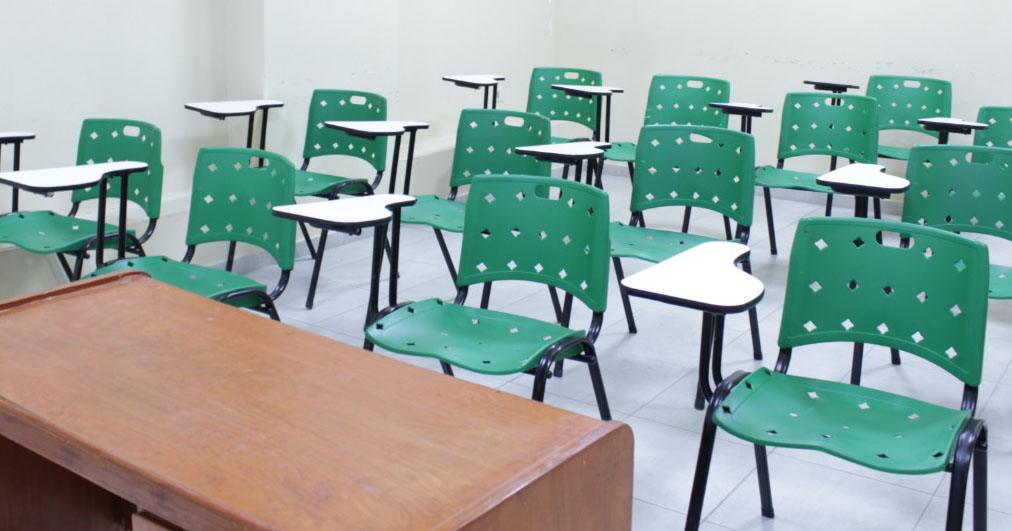
GENERAL OBJECTIVES
To provide professional training directly related to the areas of analysis, organization, programming and control of information systems, to contribute to the economic, social and cultural development of the Department of Itapúa and the country.
SPECIFIC OBJECTIVES
- To train professionals capable of recognizing, analyzing and solving the computing needs of various organizations that produce goods or services.
- To develop in students the knowledge that allows them to act as organizational consultants in all aspects related to information.
- To provide theoretical and practical training in the function of computer systems analysis, allowing not only the acquisition of a sufficient knowledge base regarding the stages of a Computer Project (Feasibility Study, Data Survey and Analysis, Design, Documentation, Programming, Testing, Implementation, Maintenance and Auditing), but also to effectively participate, during their training, in each of these stages, under tutorial supervision.
- To develop in students the ability and habit of systematically analyzing problems and mastering the scientific and technical tools necessary to do so.
- To train professionals with self-learning capacity. The progress of computing is so rapid that it is impossible to provide the future professional with all the tools they will encounter in their working life.
- To foster teamwork. As specialization advances, teamwork becomes increasingly necessary. This is another habit that students must acquire.
- To encourage autonomous thinking and an investigative spirit. The best professionals are those who seek the best solutions to problems. This is achieved through the ability to view the problem from different perspectives and to seek original solutions.
The professional graduating from the Curricular Plan of the Bachelor's degree in Computer Systems Analysis at UNIVERSIDAD MARÍA SERRANA will be qualified to:
- Participate in strategic decision-making within an organization and advise on information systems development policies.
- Evaluate, classify and select information systems projects.
- Apply the foundations of algorithms and the main programming techniques in the design, development and implementation of computer systems.
- Plan, carry out and evaluate feasibility studies inherent to any information systems design project and its modification or replacement, as well as associated computer systems.
- Plan, direct, execute and control the survey, analysis, design, development, implementation and testing of computerized systems.
- Evaluate and select available programming systems for use in information systems.
- Evaluate and select, from the perspective of information systems, processing and communication equipment and base systems.
- Organize and direct the systems area; determine the profile of necessary human resources and contribute to their selection and training.
- Determine and monitor compliance with the technical guidelines governing the operation and use of computing resources in each organization.
- Develop methods and standards related to the security and privacy of information processed and/or generated by information systems; participate in determining the actions to be taken in this matter and evaluate their application.
- Develop methods and standards related to the safeguarding and control of physical and logical resources of a computer system; participate in determining the actions to be taken in this matter and evaluate their application.
- Develop simulation models, expert systems and other computer systems aimed at problem-solving and advise on their application.
- Conduct audits in systems areas and data centers, as well as of the information systems used.
- Carry out studies and research leading to the creation and improvement of information systems development techniques and apply existing computer technology applications.
- Develop custom software.
- Organize and direct research projects in the area of Information Systems and Software Engineering.
- Diagnose problems and investigate organizational requirements and propose the systematization, standardization and automation of various administrative, productive, operational and service processes and procedures.
- Demonstrate responsibility and ethics in professional performance.
- Research topics related to cutting-edge technology such as networks, optics, robotics, information systems and hardware, focused primarily on organization, technology and knowledge.
- Design, install and program computer network systems keeping in mind the basic concepts of computer architecture and operating systems.
- Research technological and computing advances through the tools available to the computing professional, especially the Internet, as well as their applicability in our environment.
latest
news

Don't miss our
Activities
Seminario Gestión Estratégica de la Atención Primaria de la Salud y Redes de Servicios de Salud