



Psychology

Presentation
Graduates have professional training and clinical skills that help in learning to effectively face the problems of life and mental health in our society.
Why choose UPMS?
UPMS responds to today's world and looks to the future, which is why we offer:

State-of-the-art infrastructure

Practical training and
intership

Modern laboratories

Scientific and technological research

Highly qualified faculty

University extension

National and international agreements
INFORMATION AND CONTACT
Asunción
- Ruta Transchaco Km 12 casi Tarumá. Barrio Loma Pytá. Asunción, Paraguay
- +595 994 146897
- informaciones@serrana.edu.py
Office hours
Mon-Fri 7:00 to 21:30 hs.
Sat 8:00 to 13:00 hs.
Mission
To train competent and efficient psychologists, ethically responsible and capable of working in a demanding environment; with negotiation and conflict resolution competencies, entrepreneurship and strong leadership.
Vision
To be a leader in the university world, strengthening its position by committing to society and seeking continuous improvement in order to contribute to the transformation and improvement of the conditions of individuals, groups and society in general, allowing students to gain a place and prestige in the labor market.

- To train Psychology professionals capable of critically analyzing psychological knowledge and practice with a comprehensive conception of human personality in the face of current challenges.
- To promote strategies that allow students to engage in activities in different areas of Psychology: Clinical, Legal and Forensic, Occupational, Educational, Sports, Community.
- To develop a scientific conception of the human being with theoretical-methodological tools, useful for addressing the explanation and understanding of the various situations in which people operate daily in the different areas of their competence.
- To foster in future professionals the ability to work in a demanding environment, with negotiation and conflict resolution competencies, able to determine the ethical and social implications of psychological practice in different contexts.

The Psychology graduate will leave with the capacity or inclination to question the scientific and social value of their knowledge and with a line of work that integrates research and action as opposed to the mechanical application of techniques, instruments or conceptual models; creative, with a growing capacity to propose possible approaches in relation to the diverse individual and community needs.
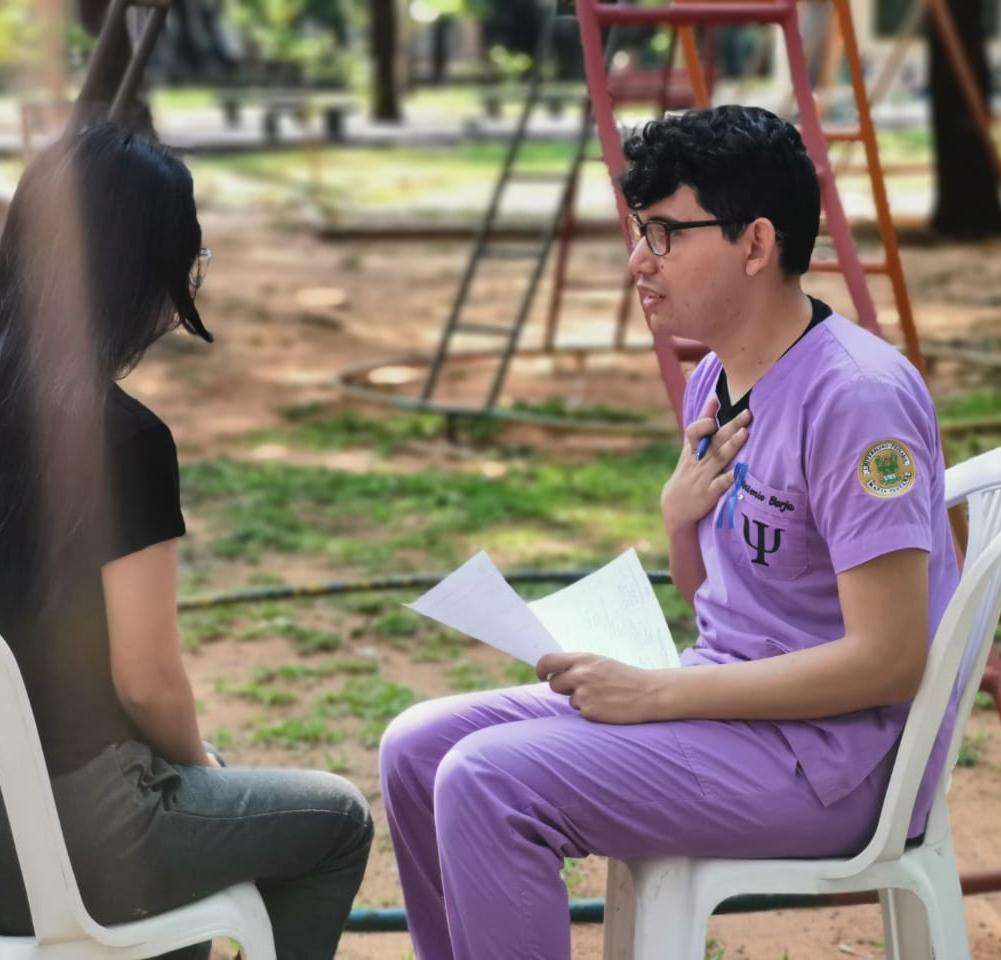
To be admitted as a student to an undergraduate program it is necessary to have completed secondary education and submit the following documents:
- 2 authenticated copies of Identity Card.
- Original Study Certificate.
- Authenticated copy of Bachelor's Degree.
- Original Birth Certificate.
- 2 color photos.
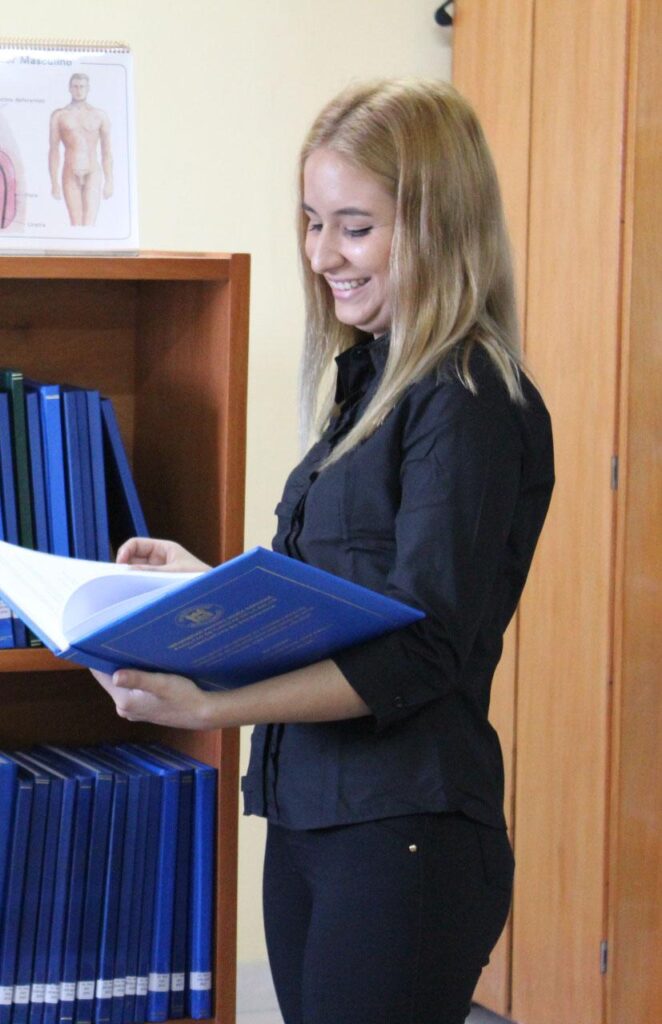
The research lines of the Clinical Psychology program constitute disciplinary or interdisciplinary thematic axes in which research activities carried out by one or more groups converge, with visible results in their academic output and through the development of research, undergraduate theses or monographs.
1. Cognition, emotion and health.
This line focuses on the development of cognitive psychosocial models and the stages of health promotion and prevention, applied especially to school health and prevention of psychoactive substance abuse. Development of measurement instruments; stress and anxiety: associated factors and consequences.
2. Clinical psychology, psychological well-being and relational systems.
Psychology in the clinical field seeks to understand the psychological difficulties of human beings, develop effective strategies to alleviate the suffering generated and study the appropriate mechanisms to transform psychological processes. Thus, this line can address a wide variety of phenomena; however, its research focuses on three primary areas of interest: psychological trauma; psychotherapy and the process of change; and couple and family relationships.
3. Socialization and child-rearing practices.
This line proposes the understanding of family upbringing, considering that upbringing is the result of sociocultural conditions and the particular interests of parents.
4. Narrative research and gender identities.
The line seeks to articulate research work on the sexed body, its social narratives and differentiation in social spaces. The general reflection on this topic considers that attitudes toward the body transcend the senses of a country, of home, as well as ideas of community and intimacy.
5. Structural violence.
Research line aimed at addressing the main manifestations of violence: family, gender, child abuse, sexual abuse, bullying and machismo.
6. Well-being and Social, Family and School Development.
Research line oriented toward promoting the development of human potential in its different social contexts: community, family and school coexistence; parenting styles and education in children and adolescents; the influence of new information and communication technologies in formal and informal training processes.
7. Psychology and work.
This research line aims to study the health of workers, according to the economic and sociocultural reality, and health well-being conditions. This line aims to study human behavior in organizations and the relationship between educational environments and the world of work.
8. Violence and Personality.
This line seeks to investigate the social phenomenon of violence and the personality characteristics of citizens, taking as its target population any subject, group, subgroup or social niche where certain parameters can be identified that allow inferring a psychosocial identity or structure, such as guerrilla, displacement, reintegration, domestic abuse, child abuse, etc.
9. Clinical Problems and Health
To generate research related to evaluation and intervention in clinical and health problems (anxiety, depression, stress, addictions and specific populations: women, elderly, children, university students, etc.).
10. Learning Processes, Difficulties and Learning Disorders
To generate research on motivation, memory, language and creativity.
11. Educational Development Processes
To produce research on early stimulation, communicative development, education, childhood and adolescence, and psychological processes in childhood and adolescence.
12. Sports Psychology
Research line that allows understanding the different benefits of sport for physical, psychological and spiritual health and well-being. Also the scientific study of sports behavior.
13. Forensic Psychology
Research line oriented toward the area of persons deprived of liberty, addressing topics such as causes of crime, diagnoses, purpose of sentencing, prison treatment for subsequent reintegration into society and crime prevention.
latest
news
Don't miss our
Activities
Seminario Gestión Estratégica de la Atención Primaria de la Salud y Redes de Servicios de Salud