
Nursing

Presentation
Grounded in the health sciences, the Nursing program is responsible for training excellent nursing professionals with a solid scientific, humanistic and disciplinary foundation. Its primary purpose is to provide comprehensive nursing care to individuals, families, groups and communities, healthy and ill, at different stages of the life cycle.
Why choose UPMS?
UPMS responds to today's world and looks to the future, which is why we offer:

Accredited by ANEAES

State-of-the-art infrastructure

Practical training and
intership

Modern laboratories

National and international agreements

Scientific and technological research

University extension

Highly qualified faculty
Information and contact
Asunción
- Ruta Transchaco Km 12 casi Tarumá. Barrio Loma Pytá. Asunción, Paraguay
- +595 994 146897
- informaciones@serrana.edu.py
Office hours
Mon-Fri 7:00 to 21:30 hs.
Sat 8:00 to 13:00 hs.
Mission
To train nursing professionals characterized by their ethical soundness, with competencies focused on the person, their care and environment, to respond to the health needs of the population through the permanent renewal of their academic and research knowledge through constant and humanized practice.
Vision
To rank among the best Bachelor's in Nursing programs at the national and international level for its training of competent professionals, committed to the ecosystem, health improvement and human development, supported by research output and scientific-technological development that responds to future professional demands and challenges in the areas of: clinical care, management and education.
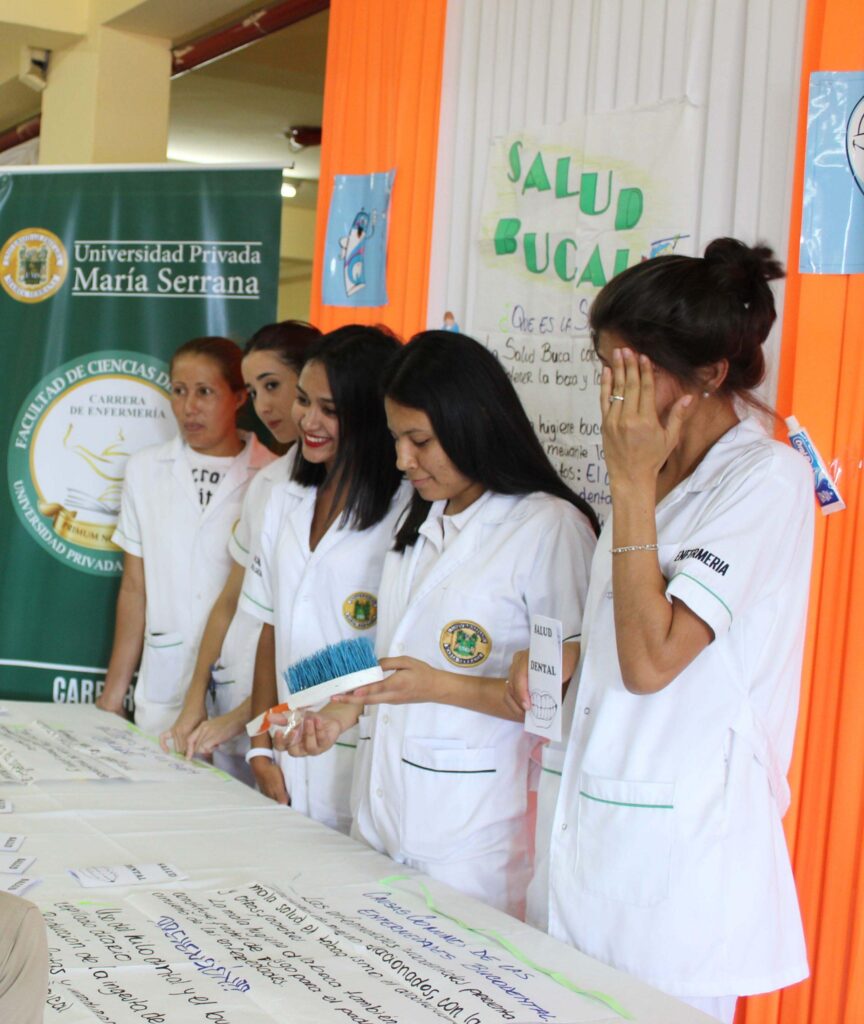
GENERAL OBJECTIVE:
The Nursing program is a discipline grounded in the health sciences responsible for training excellent nursing professionals with a solid scientific, humanistic and disciplinary foundation. Its primary purpose is to provide comprehensive nursing care to individuals, families, groups and communities, healthy and ill, at different stages of the life cycle, at all levels of health prevention and care, through the application of the Nursing Care Process (NCP), university extension and research.
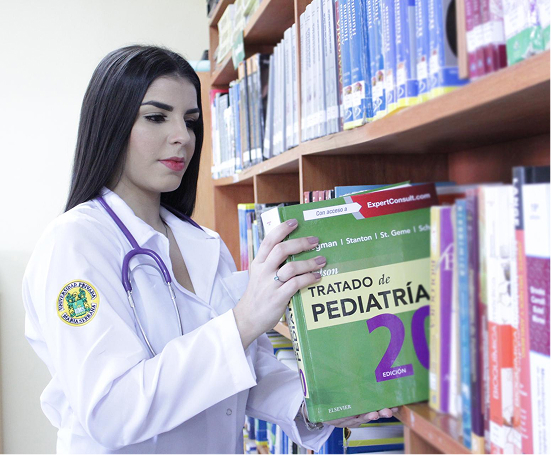
The graduate of the Bachelor's in Nursing program is a health area professional with high scientific and technical competencies, imbued with ethical and human values, sensitive to the need for comprehensive care of the person, who provides services with a reflective and investigative attitude, as well as a sense of commitment and participation in organizations that promote permanent innovation in the field of nursing.
The Bachelor's in Nursing program will train, throughout the educational process, professionals who will be able to perform effectively, responsibly and with a humanitarian spirit individually, in multidisciplinary and interdisciplinary teams, in the professional health field.
Graduate profile expressed in competencies and capabilities that the graduate of the Bachelor's in Nursing program at Universidad Privada María Serrana will possess.
UNIVERSITY SOCIAL RESPONSIBILITY, assuming an institutional commitment to the care and promotion of natural and social environments with ethical, responsible professional and academic practice, with the conviction that a better world is built with everyone's participation.
QUALITY MANAGEMENT permanent pursuit of perfection in teaching, research and extension activities; encouragement of innovation and creativity with service excellence and respectful treatment of people.
RESPECT recognizing, accepting and valuing the qualities, ideas, beliefs and rights of all people based on the conviction of the universality of being, as an element that enhances development.
NATIONAL IDENTITY respecting, strengthening and maintaining the historical legacy, valuing belonging to a historical-cultural community that allows balancing transfers from the global, regional and local context without losing identity.
EQUITY manifested first and foremost in the offering of services without distinction of race, creed or social background, contributing to the construction of democracy.
INTRODUCTION
The process of building a training proposal, in most cases, implicitly carries a purpose of continuous improvement for the training of competent professionals within a plurality of dimensions, new emerging and re-emerging paradigms according to situation and circumstances; the University must commit to the generation of knowledge from strategies that can be glimpsed from that perspective.
Starting from the expressed premise, the requirements of the Higher Education Law, the declaration of the Institutional Mission and Vision of Universidad María Serrana, the regulations and regime of the Nursing program, the development plan, and the guidelines of ANEAES through its peer evaluators, the identification of research lines was carried out as a practice performed with the professional staff of the Nursing program together with those responsible for the Research and Technology Directorate of Universidad María Serrana. As a starting point, experiences were exchanged, initiatives were socialized achievements and difficulties were shared, and subsequently a consensus was reached to position todos a ourselves all in favor of the convergence of mutual interests around working in lines, groups and projects, to understand their meaning and undertake actions toward systematic, exhaustive and continuous work, reviving and realizing the goals of higher education in the training of professionals with a strong commitment to research. And to fulfill one of the Institution's mission objectives, which is to build a research culture, strengthening and tightening the collective; it is understood that a research line is the result of the consolidation of research groups and projects, but above all, of their institutionalization and recognition by peers, organizations and specialized bodies of the national order.
Research in Nursing stems from the health needs and daily work of the profession within its discipline.
From these, the following research lines emerge
RESEARCH LINE 1
- The professional practice of Nursing and its insertion and performance in the labor market
DefinitionCharacterization of the working and health conditions of nursing staff in different labor performance scenarios. Description of knowledge related to the training of nursing professionals.
Prospective of the line: The line aims to advance in the guidelines that allow orienting institutional policies on organizational climate in different development sectors, in addition to contributing to curriculum feedback.
Examples: Practice of Nursing from the perspective of Ethics and Bioethics. Nursing Models and Theories in Health-Disease Care. Philosophy of Nursing. Evolution of Nursing. Nursing Care Process NCP. Health Beliefs and Practices, interculturality. Roles and functions of the nursing professional. Legal Framework of Professional Practice.
RESEARCH LINE 2
- Administration of Nursing care to the user..
Definition: Definition: To establish the efficacy or effectiveness of nursing interventions for diagnoses specific to the profession. Study of the most frequent Nursing diagnoses.
Prospective of the line: The line will allow the establishment of recommendations on characteristics and risk factors necessary for nursing diagnoses.
Examples: Care of the basic needs of the individual throughout the life continuum in health and/or illness situations. Care of the basic needs of women, newborns, families and communities (Sexual and Reproductive Health). Nursing Care for Adults.
RESEARCH LINE 3
- Administration of Nursing services
Definition: To characterize the design, planning, organization and evaluation of nursing processes and programs for the health care of the population both in health and welfare institutions and in independent practice.
Prospective of the line: The line aims to identify problems related to professional practice. Its scope integrates knowledge necessary for the administration of health services.
Examples: Hospital Nursing Administration and Management/Public Health. Organization of Health Services. Economic Management of Hospitals/Administrative Processes. Administration and Management Model. Interpersonal and institutional communication. Management of Human Talent Health Services, among others.
LINEA DE INVESTIGACIÓN 4
- Community Nursing and Primary Health Care
Definition: Identification of the aspects that characterize the community and health services with a PHC approach, aimed at improving their delivery.
Prospective of the line: The line aims to formulate proposals, from the nursing perspective, that allow the development of comprehensive programs that address community needs.
Examples: Epidemiological Analysis of Health/Disease. Emerging and Re-emerging Diseases. Communicable and non-communicable diseases. Infection chains of infectious-contagious and tropical diseases. Health Policies, Systems and Services.
RESEARCH LINE 5
- Ecosystems and Human Well-being
Definition Environmental changes and ecosystem deterioration due to the clear growth of population and economic development.
Prospective of the line: The line aims to identify problems related to the consequences of environmental deterioration and ecosystem changes and their various effects on health.
Examples: Direct health impacts related to the ecosystem.. Climate change. Flooding. Increasing radiation exposure. Exposure to contaminants. Impact of impoverishment. Urbanization and its impacts. Freshwater contamination.
Research activities, we must look with perspective at what knowledge places in our hands and, accordingly, develop, propose and advance proposals that contribute to improving the quality of life and health of the population.
Foundation of a research line
- Cognitive Foundation: Set of experiences, knowledge, assumptions, hypotheses, theoretical elaborations and analyses that, embodied in documents and other materials, will serve as a platform for research lines as epistemological spaces.
- Methodological Foundation: Set of methods, techniques and procedures that will be used in the research line to address problems in order to obtain knowledge.
- Philosophical-axiological Foundation: Refers to the ultimate goal pursued by the line; this philosophical background is focused on the grounding, principles and values on which the research line is based.
- Practical Foundation: These are the aspects or products that will originate systematically, planned and organized. They will become the dynamics of application. For example, according to Legal O. (2011), it refers to structures, plans and programs to address the needs of students and faculty.
Source: D. Silva Palomares 2014
Requirements for a research line
- Research lines must be connected to the context in which they are developed
- They must have Institutional relevance, meaning they must be framed within the matrix line of action of the Institution to which they belong
- There must be coherence and continuity among the different projects and research that make up the line
- They must allow potential research to be visualized
- They must provide opportunities to give continuity to completed research
- They must be flexible to accommodate new research
- They must connect different thematic areas in a transdisciplinary manner
- They must be supported by an Institutional organization that connects line leaders with research leaders and department or directorate heads who report to the entity in charge of coordinating Research within the Institution
In conclusion, and drawing from the various concepts noted, it can be said that a line arises from addressing problems of various kinds; that these problems are found within the complexity of reality, in our own contexts, and merit different perspectives and approaches. The line is a thematic field, a systematic and exhaustive perspective in the generation of new knowledge, a horizon drawn today with an eye toward tomorrow.
These research lines are subject to the Regulatory Framework of the Regulations for the completion of the Final Undergraduate Work.
latest
news
Don't miss our
Activities
Atención Médica Especializada
Taller | Diversidad e Inclusión